14 Jun 2026
Coastal Venue Winds Transforming Golf Shot Probabilities in Professional Tournaments
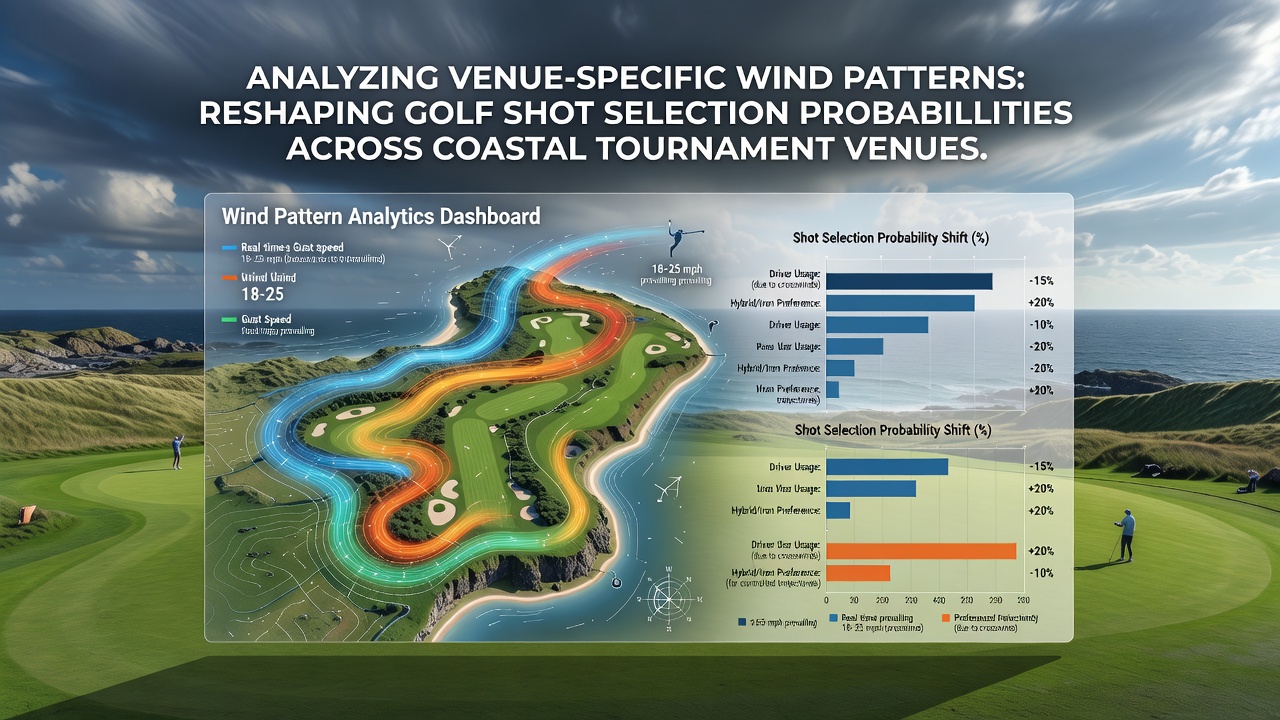
Coastal golf venues present unique challenges where persistent wind patterns directly influence shot selection and alter success probabilities for players during major tournaments, with data from meteorological records showing consistent directional shifts that favor certain club choices over others. Observers note how these winds often intensify in afternoon hours, creating layered effects on ball flight that force adjustments in trajectory and spin rates across multiple holes. Research from the National Oceanic and Atmospheric Administration indicates that venues along exposed shorelines experience average wind speeds exceeding 15 miles per hour on more than 40 percent of tournament days, reshaping the mathematical models used to calculate optimal landing zones.
Studies conducted at sites like Pebble Beach and similar Pacific coastal layouts reveal that crosswinds from the ocean create pronounced left-to-right movement on approach shots, particularly when players select mid-irons from distances between 150 and 180 yards. Those who've analyzed shot-tracking data from the PGA Tour find that success rates for greens in regulation drop by approximately 12 percent under sustained winds above 20 miles per hour, prompting strategic shifts toward lower ball flights and controlled draws. What's interesting here is how these patterns vary by time of year, with spring events showing different dominant wind vectors compared to summer schedules.
Regional Wind Variations Across Key Coastal Sites
Each coastal venue develops its own signature wind behavior shaped by local topography adn sea currents, leading analysts to compile detailed databases that map hourly changes throughout tournament weeks. At East Coast locations such as Harbour Town, prevailing southeasterly breezes tend to push balls toward water hazards on the back nine, which in turn elevates the probability of lay-up shots on par-five holes by measurable margins according to historical scoring averages. In contrast, West Coast sites often feature afternoon onshore flows that add distance to downwind holes while reducing carry on approaches into elevated greens.
Experts tracking these conditions across multiple seasons observe that players adapt by altering launch angles, with data sets from ShotLink systems showing increased use of punch shots and three-quarter swings when gusts exceed certain thresholds. One analysis of tournament results from June 2026 events highlighted how morning calm periods gave way to stronger thermal winds by midday, compressing the window for aggressive pin hunting and favoring conservative target selections on several par-three holes. Such shifts appear consistently in aggregated statistics, allowing forecasters to build probability models that account for these hourly transitions.
Data-Driven Adjustments in Club and Trajectory Selection
Quantitative models built from past tournament data demonstrate clear correlations between wind speed categories and club selection frequencies, where stronger headwinds prompt players to move up one or two clubs while favoring lower lofts to maintain control. Those studying these interactions point to specific examples at venues like Kiawah Island, where incoming ocean winds on the ocean-side nine increase the likelihood of hybrid club usage off the tee by roughly 18 percent compared to inland events. Ball flight data further indicates that fade shots become more reliable in right-to-left wind conditions, reducing dispersion patterns that otherwise lead to rough or bunker penalties.
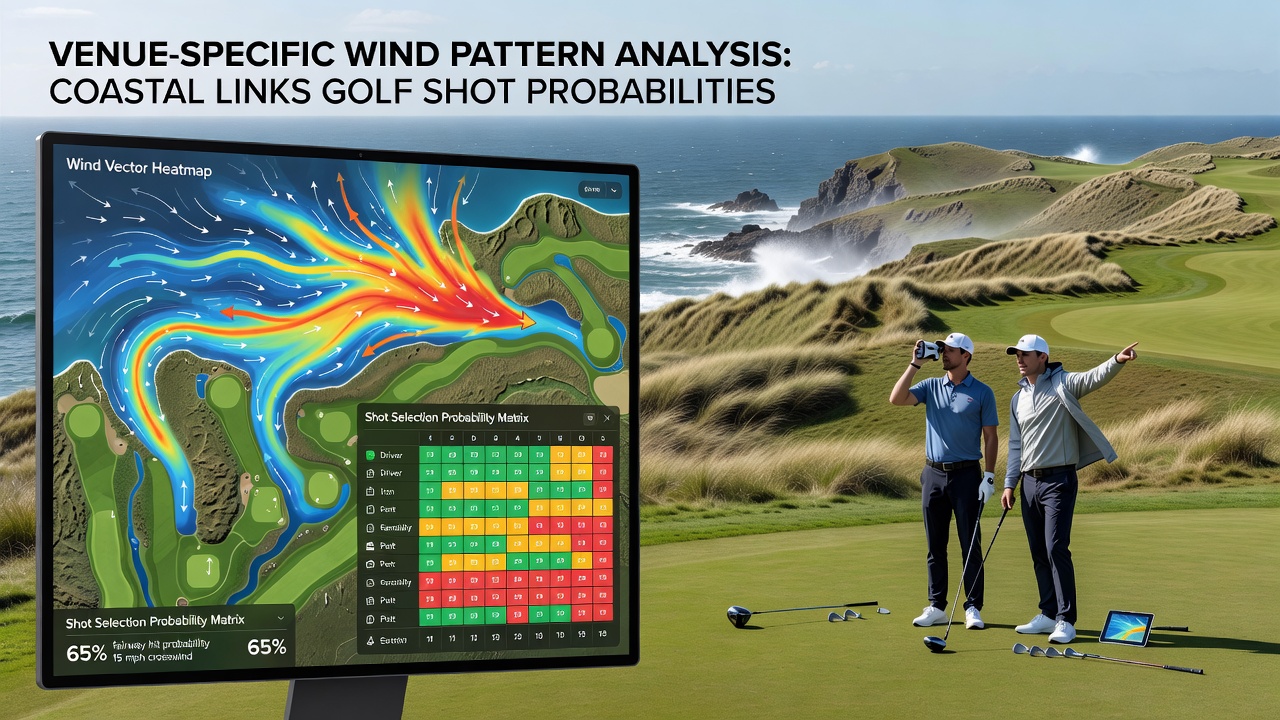
Academic research published through meteorological partnerships with golf organizations shows that temperature gradients between land and sea amplify these effects in late afternoon, creating vertical wind shear that affects longer clubs more than shorter ones. Players often respond by choking down on grips or selecting different ball positions in their stance, adjustments that statistical reviews link to improved proximity metrics under variable conditions. The reality is that these venue-specific patterns require ongoing monitoring because slight changes in tide levels or atmospheric pressure can modify expected wind behavior within a single round.
Integrating Wind Models into Tournament Preparation
Coaching teams now incorporate real-time wind modeling software that draws from buoy readings and coastal weather stations to simulate shot outcomes before each round begins. Figures from recent seasons reveal that competitors who adjust their practice routines to include wind-specific drills achieve higher fairway hit percentages when conditions match historical averages for the venue. One case study from an Australian coastal event tracked how a group of players modified their driver trajectories based on forecasted crosswinds, resulting in measurable gains in driving accuracy compared to those relying on standard setups.
Organizations such as the National Oceanic and Atmospheric Administration provide publicly accessible datasets that support these preparations, while additional insights come from university-led studies on atmospheric dynamics at golf facilities. These resources help identify recurring patterns, such as the tendency for thermal winds to shift direction after 3 p.m. local time, which in turn influences risk-reward decisions on reachable par-fives. Observers tracking professional circuits note that preparation cycles increasingly include contingency plans for sudden gusts that can alter effective yardages by up to 25 yards on exposed holes.
Conclusion
Analysis of wind patterns at coastal tournament venues continues to evolve as new data collection methods refine probability assessments for shot selection across different conditions. Venues maintain distinct characteristics that demand tailored approaches, with aggregated records showing consistent impacts on scoring averages and strategic choices. Continued integration of meteorological tools with performance tracking systems supports more precise modeling of these environmental factors in future events.