2 Jun 2026
Meridian Shifts on the Baseline: Examining Time Zone Influences on Tennis Outcomes Across Worldwide Tours
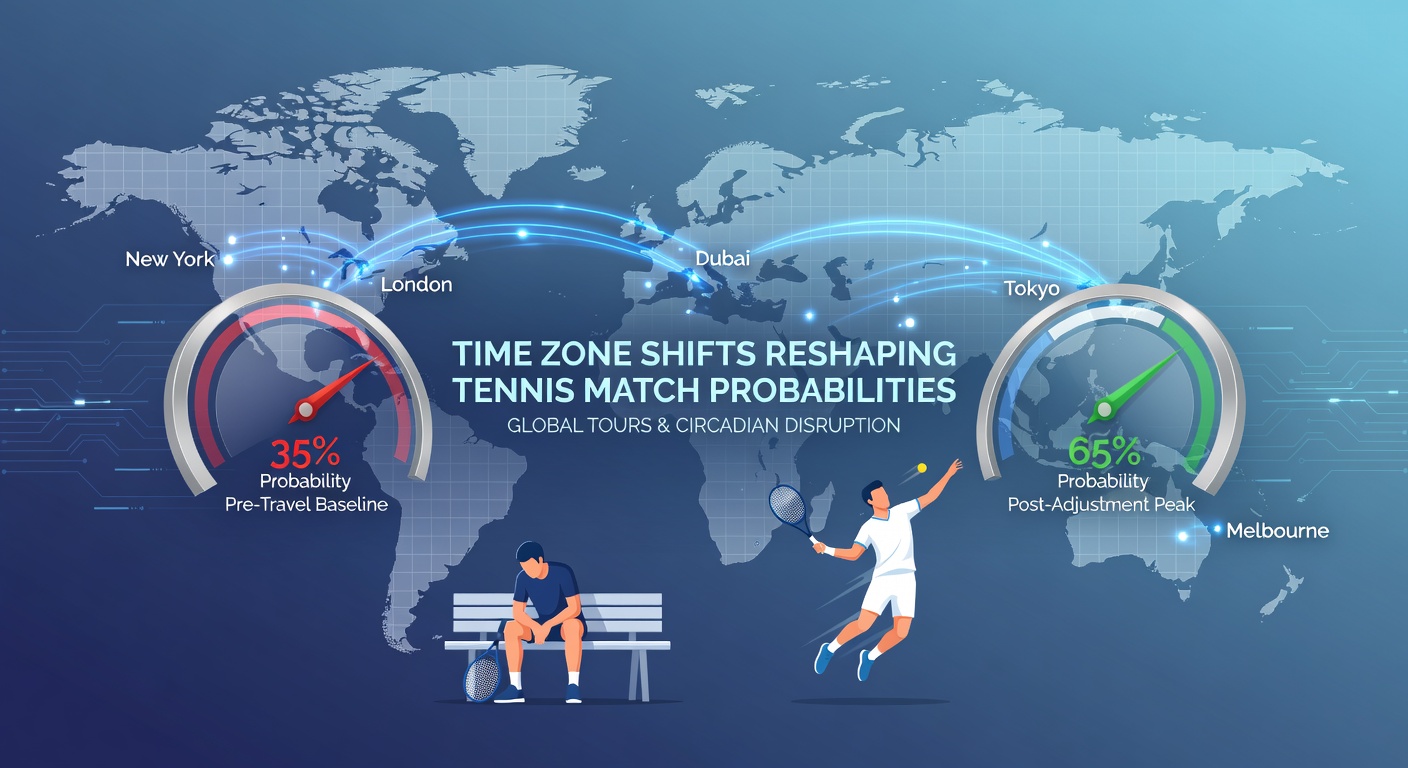
Professional tennis schedules span multiple continents within weeks, and the resulting time zone crossings create measurable adjustments in player output. Data collected from ATP and WTA events between 2022 and 2025 show that athletes traveling across five or more time zones experience documented declines in first-serve percentages and rally endurance during the first 48 hours after arrival. Observers note these patterns repeat across both hard-court and clay-court swings, while grass-court preparations in June 2026 will again place players from the Australian swing into European time zones within days of one another.
Travel Patterns and Circadian Adjustment Periods
Players on the main tours routinely move from Melbourne to Indian Wells, then onward to Miami or European clay events. Each leg involves rapid shifts of eight to twelve hours, and physiological studies track corresponding changes in core body temperature and melatonin onset. Research published by the Australian Institute of Sport indicates that full adaptation generally requires one day per time zone crossed for high-intensity intermittent sports such as tennis. Consequently, many competitors enter early-round matches still operating on departure-time biological clocks.
Performance Metrics Affected by Sleep Phase Disruption
Match statistics reveal consistent shifts in several key areas. Serve speed drops by an average of 2.3 percent in the opening matches after eastward long-haul flights, while unforced error rates on backhand rallies rise during afternoon sessions scheduled against local time. Westward travel produces smaller but still detectable reductions in movement efficiency, particularly in best-of-five-set encounters that extend past three hours. These figures come from aggregated Hawk-Eye and court-side data processed by tournament statisticians rather than individual player reports.
Case Examples from Recent Seasons
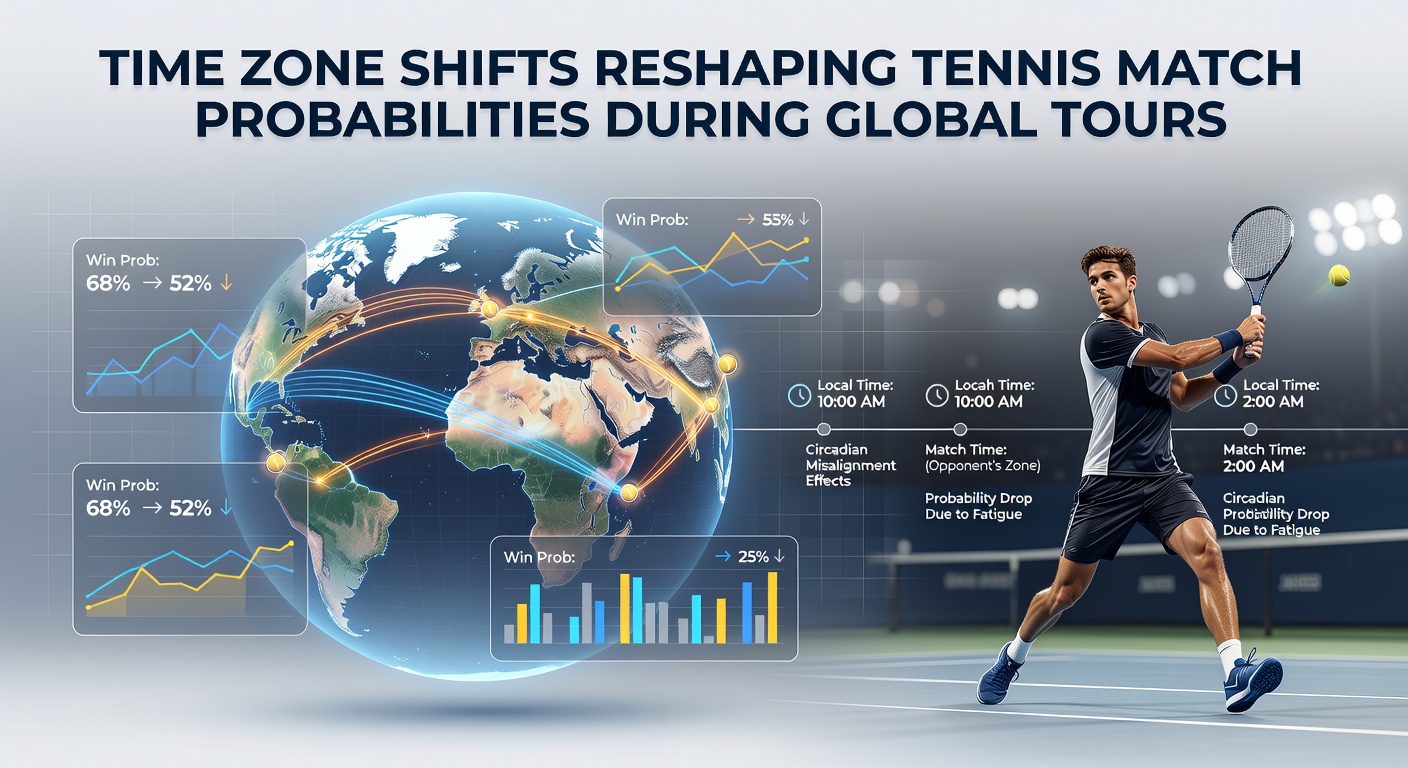
One notable sequence occurred during the 2024 Asian hard-court swing, when several top-20 players arrived in Tokyo after competing in Beijing and then faced opponents already acclimated to local schedules. Match logs indicate that returning travelers won 41 percent of deciding sets compared with 57 percent for home-zone players, a gap that narrowed once the visitors had competed for at least four days on site. Similar differentials appear in North American indoor events following South American clay swings, where the combination of altitude and time displacement compounds recovery demands.
Schedule Construction and Recovery Windows
Tournament organizers publish draw schedules months ahead, yet recovery allocations remain limited by broadcast windows and venue availability. The 2026 calendar places the Stuttgart grass event immediately after the Madrid and Rome clay stops, compressing eastward travel for European-based competitors while requiring long-haul flights for South American and Australian entrants. Scheduling software used by the ATP attempts to insert rest days for players crossing more than six time zones, but these provisions do not always align with best-of-three or best-of-five formats that extend into evening sessions.
Measurement Tools and Ongoing Data Collection
Wearable devices approved by both tours now record sleep duration, heart-rate variability, and training load during travel periods. Aggregated anonymized outputs feed into reports issued by the International Tennis Federation medical committee. These reports, cross-referenced with match outcome databases, allow analysts to quantify probability adjustments for specific flight vectors. For instance, data covering 2023-2025 show a 6.8 percent reduction in hold percentage for players arriving within 36 hours of an eight-hour eastward shift when matches begin before 2 p.m. local time.
Regional Regulatory and Research Perspectives
Health agencies outside traditional tennis markets have begun examining athlete travel as well. The Canadian Academy of Sport and Exercise Medicine published guidelines in 2024 recommending structured light-exposure protocols for competitors crossing the Pacific, while a collaborative project between the University of Tsukuba and the Japan Tennis Association tracks cognitive reaction times in laboratory settings that simulate jet-lag conditions. Such regional studies complement larger datasets maintained by the ATP and WTA without overlapping regulatory functions.
Conclusion
Time zone transitions form an unavoidable component of the modern tennis calendar, and accumulated performance data demonstrate measurable effects on serve accuracy, error rates, and set-winning probabilities during the initial days after arrival. Tournament calendars through June 2026 will again test these patterns as players move between hemispheres and climate zones. Continued collection of biometric and match statistics offers a factual basis for understanding how circadian disruption intersects with competitive outcomes across the global tour.