20 Aug 2026
Night Racing Under Lights: How Artificial Illumination Shapes Form and Each-Way Opportunities at Floodlit Tracks
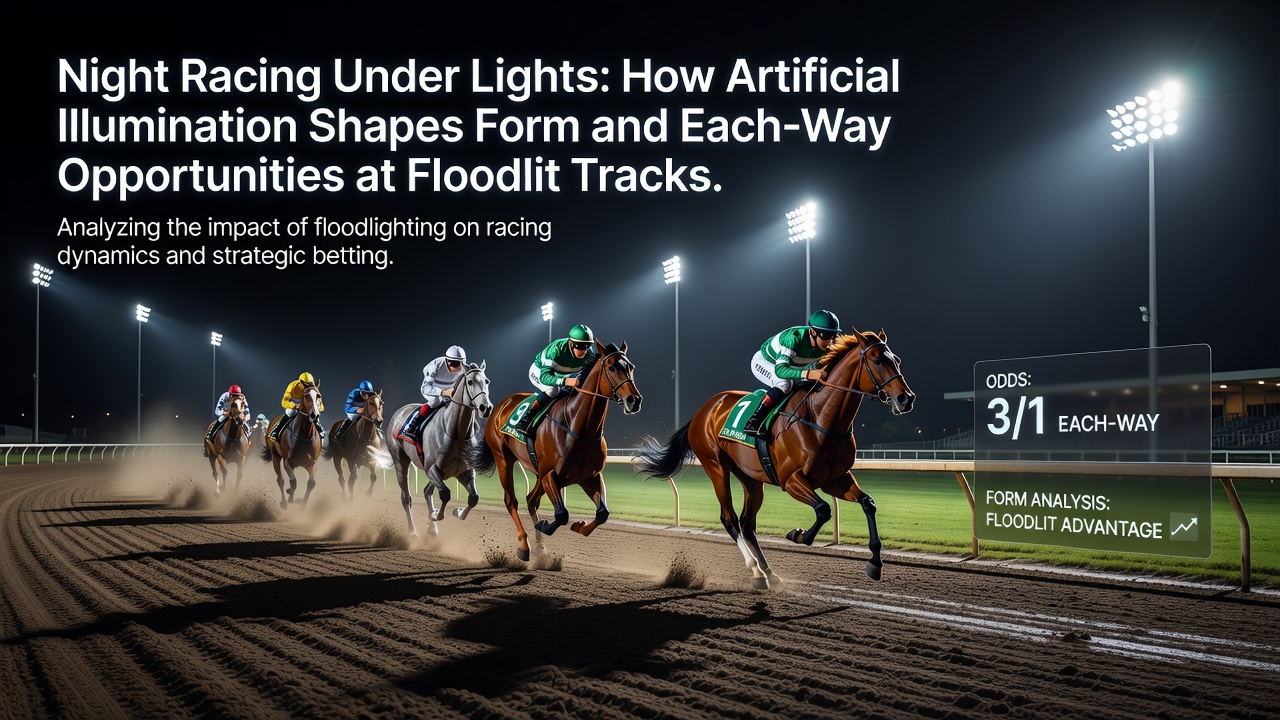
Floodlit horse racing has expanded steadily across multiple regions, with tracks installing high-intensity LED systems that allow meetings to run after sunset while maintaining visibility standards set by racing authorities. Data from the International Federation of Horseracing Authorities indicates that floodlit fixtures now account for a growing share of annual race days in both Europe and Australia, particularly during winter months when daylight hours shorten. In August 2026, several all-weather venues have scheduled additional evening cards to accommodate increased demand from bettors and broadcasters.
Artificial illumination alters track surfaces through heat radiation and changes in moisture retention, which researchers at the Equine Science Centre have measured in controlled studies. Horses that perform well on sunlit tracks sometimes shift their running style when shadows and glare appear, leading to revised speed figures that handicappers track across seasons. Observers note that certain trainers adjust preparation routines by incorporating night gallops to familiarise runners with the altered visual field.
Visual and Physiological Responses to Floodlighting
Horses possess a wider field of vision than humans yet remain sensitive to sudden contrasts between bright patches and darker zones created by overhead arrays. Studies published in the Journal of Equine Veterinary Science document measurable changes in stride length and head carriage when animals transition from natural to artificial light during the same meeting. These adjustments influence closing sections of races, where late runners either benefit from the consistent beam or lose momentum when reflections appear on the rail.
Heart-rate monitors attached during trials show elevated readings in the minutes before the start under floodlights compared with daytime equivalents, although the difference narrows once the race begins. Trainers who monitor these metrics report that acclimatised horses return to baseline levels faster, producing more reliable form lines for each-way calculations.
Form Patterns at Specific Floodlit Venues
Tracks equipped with full lighting systems such as Kempton Park, Wolverhampton, and certain Australian provincial circuits exhibit distinct winner profiles. Inside draws maintain an edge on tight bends because the light distribution remains more uniform closer to the rail, while wide runners encounter variable glare that can affect balance through the turn. Statistics compiled over multiple seasons reveal that favourites win at a slightly lower rate on floodlit surfaces than on turf during daylight, opening value in the place markets.

Each-way opportunities increase when fields contain a mix of day and night specialists. Horses with proven records under lights often start at shorter prices in the win market, yet their place percentages remain strong enough to support bets that combine both outcomes. Handicappers who separate performances by lighting condition find that certain sires produce progeny better suited to artificial environments, adding another layer to pre-race analysis.
Betting Market Adjustments and Data Trends
Bookmakers update odds throughout the day as daylight fades and shadows lengthen, reflecting the latest track-surface readings. Historical datasets show that each-way payouts at floodlit meetings average higher than daytime equivalents because more runners finish within a narrow margin of the placed horses. Those who review sectional timing data note that mid-race tempos sometimes slow when horses adjust to the light, allowing patient riders to conserve energy for stronger finishes.
Industry reports from Racing Australia highlight similar patterns at tracks that introduced LED upgrades between 2023 and 2025, with place percentages rising for horses that had prior exposure to floodlit conditions. Bettors who maintain separate form databases for day and night performances gain an informational edge when assessing larger fields where each-way fractions become attractive.
Conclusion
Floodlit racing continues to evolve as venues refine lighting technology and collect more granular performance data. The interaction between artificial illumination, equine physiology, and track conditions produces measurable shifts in form that directly affect each-way strategies. Continued monitoring of these variables allows participants to identify consistent patterns across different jurisdictions and meeting types.