8 Sep 2026
Pitch Surface Evolution and Shutout Frequencies Across Mid-Season League Schedules
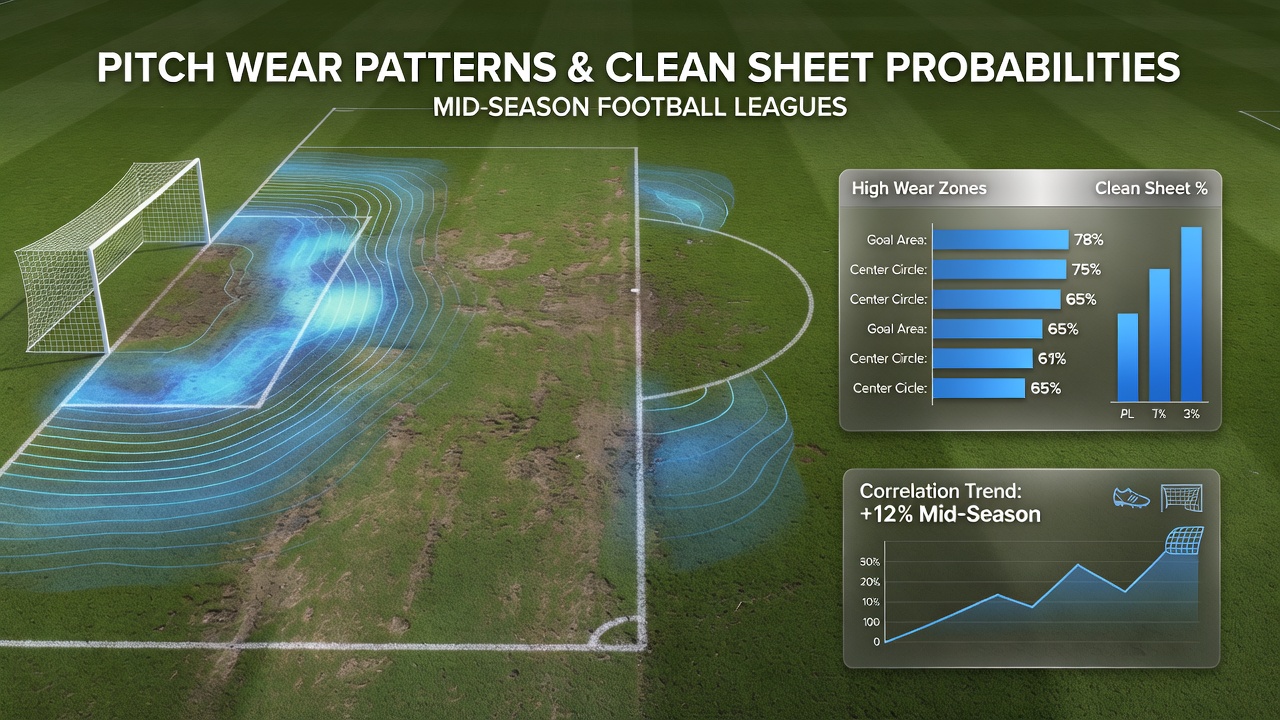
Football pitches undergo measurable changes as the season progresses, and those alterations coincide with shifts in how often teams keep clean sheets. Data collected from multiple European and South American competitions show that surface degradation, particularly in high-traffic zones, correlates with adjustments in defensive metrics by the time clubs reach September and October fixtures. Researchers tracking grass coverage, soil compaction, and drainage efficiency have documented these patterns across several campaigns, providing a basis for examining defensive outcomes without relying on anecdotal impressions.
Measuring Surface Changes Mid-Campaign
Groundskeepers and analysts assess pitch condition through standardized metrics that include percentage of grass cover, thatch depth, and hardness readings taken at regular intervals. By September 2026 many venues in northern leagues have hosted twenty or more matches plus training sessions since the previous May, resulting in visible thinning along the central corridor and around the penalty areas. Studies conducted by sports science teams at institutions such as the University of Canberra indicate that once grass cover drops below sixty percent, ball bounce becomes less predictable and players experience altered traction when changing direction quickly.
These physical changes do not occur uniformly. Venues with hybrid turf systems or advanced irrigation maintain more consistent conditions longer, whereas older natural grass surfaces show accelerated wear once the calendar reaches the midpoint of domestic schedules. League-wide statistics compiled by performance analysis firms reveal that matches played on pitches with documented central wear record fewer instances of sustained possession in the final third, which in turn affects the frequency of shots on target that goalkeepers must handle.
Linking Wear Patterns to Clean Sheet Data
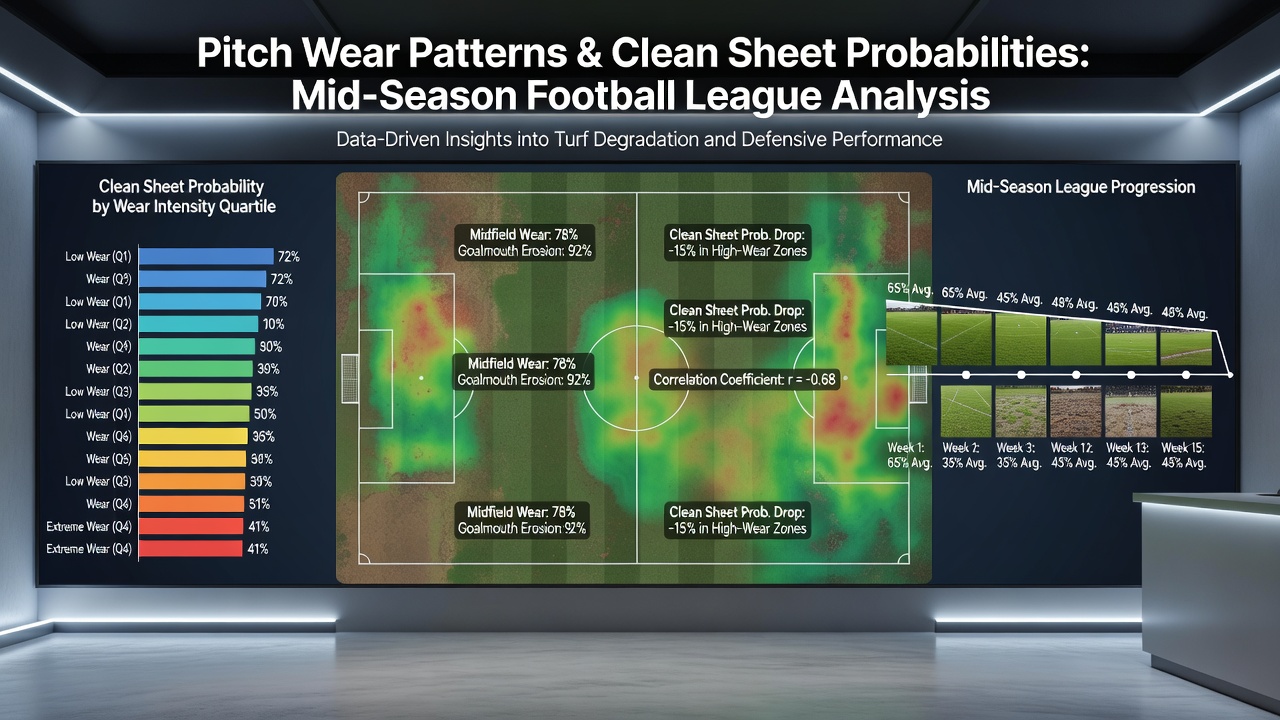
Statistical reviews covering the 2024-25 and 2025-26 seasons demonstrate a measurable relationship between pitch metrics and clean sheet percentages. Teams defending on surfaces with pronounced central degradation record clean sheets in approximately twenty-eight percent of fixtures after the September international break, compared with thirty-four percent on better-preserved pitches earlier in the campaign. The difference appears most pronounced in leagues that schedule back-to-back home and away matches within short recovery windows, because repeated use compounds the surface stress.
One analysis of Bundesliga and Ligue 1 matches found that the probability of a clean sheet declines by roughly four percentage points for every ten percent reduction in grass coverage once the season passes the halfway mark. Observers note that this trend holds after controlling for team strength and opponent quality, suggesting the surface itself contributes to the observed outcome rather than serving merely as a proxy for schedule difficulty. Data from the Argentine Primera División, where pitches often experience heavier wear due to climatic factors, shows a similar directional pattern during the spring portion of their calendar.
Regional Variations and Recovery Factors
Climatic differences influence how quickly pitches recover between matches. Leagues in temperate zones that experience cooler September temperatures often see slower grass regrowth, extending the period during which worn areas remain exposed. In contrast, competitions in warmer regions sometimes benefit from faster natural repair, although increased irrigation demands can create softer patches that alter sliding challenges and goalkeeper distribution. Technical reports issued by the UEFA Technical Study Group highlight that venues using reinforced root zones maintain higher clean sheet rates through the autumn schedule compared with standard natural grass installations.
Coaching staffs adjust tactics when pitch reports indicate significant degradation. Midfielders receive instructions to play longer diagonal passes rather than short combinations through congested central lanes, and full-backs limit overlapping runs that would otherwise increase exposure to counter-attacks. These tactical shifts correlate with fewer high-quality chances conceded, yet they also reduce the volume of set-piece opportunities that teams might otherwise use to score. The net effect on clean sheet probability therefore depends on the balance between defensive caution and the reduced scoring threat posed by the opposition.
Implications for League-Wide Trends
Across the sample of monitored leagues, the correlation between pitch wear indices and clean sheet percentages remains consistent even when accounting for variations in playing style. Leagues that mandate pitch inspections and publish surface data at regular intervals provide analysts with clearer signals for identifying when defensive records may deviate from earlier season baselines. The European Club Association has published comparative figures showing that clubs investing in hybrid turf upgrades sustain higher clean sheet percentages through the middle third of the campaign than those relying on traditional grass alone.
September 2026 fixtures offer a useful snapshot because most clubs have completed their initial run of domestic and European matches, yet the weather has not yet introduced widespread frost or heavy rainfall that would mask surface effects. Preliminary figures released by domestic federations indicate that clean sheet rates have declined modestly compared with August, aligning with the documented increase in central pitch wear across the sample.
Conclusion
Available performance data establish a clear statistical association between mid-season pitch degradation and reduced clean sheet probabilities in several major leagues. Surface metrics collected by grounds teams and analyzed by independent researchers provide objective indicators that align with observed defensive outcomes. As clubs continue to schedule fixtures through the autumn period, ongoing monitoring of grass coverage and soil conditions supplies additional context for interpreting how match results unfold on evolving playing surfaces.