4 Jun 2026
Travel Fatigue Patterns and Performance Metrics in Global Racing Circuits
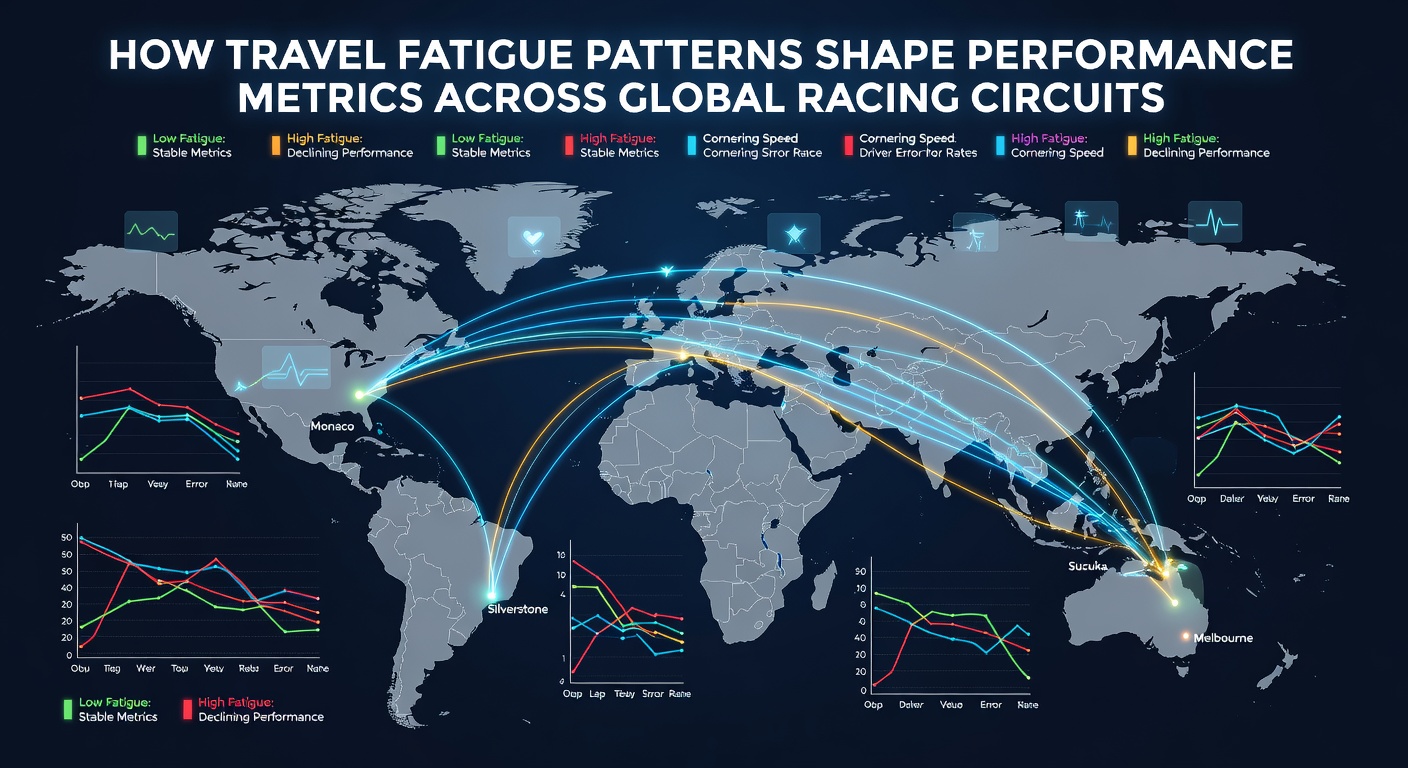
Global racing schedules demand frequent long-distance travel that disrupts sleep cycles and physiological rhythms, which in turn alters measurable performance indicators such as reaction times, lap consistency, and error rates. Teams track these variables through telemetry systems that record sector times, throttle inputs, and steering corrections during practice, qualifying, and race sessions across continents.
Physiological Responses to Crossing Time Zones
Drivers moving between circuits in Europe, Asia, and the Americas encounter rapid shifts in circadian alignment that affect alertness and motor coordination. Studies conducted by the Aerospace Medical Association show that eastbound flights produce stronger desynchronization than westbound routes because the body struggles more with advancing its internal clock. Performance logs from Formula 1 events held after transcontinental journeys reveal slower average sector times in the opening practice sessions, with recovery typically requiring two to three days depending on the number of time zones crossed.
Endurance racing series that contest events in Australia followed by Europe demonstrate similar patterns. Data collected during the 2025 season indicated that drivers arriving within 48 hours of a race start posted higher rates of minor off-track excursions during the first two hours of running compared with those who had arrived earlier and adjusted their schedules.
Documented Patterns Across Major Series
Telemetry comparisons from the 2024 and 2025 calendars highlight recurring trends. Teams competing in the FIA World Endurance Championship recorded a measurable dip in braking efficiency during night stints when drivers had recently completed flights exceeding eight hours. In single-seater categories, qualifying lap deltas between the first and second sessions often narrow once circadian adjustment occurs, suggesting that initial sessions capture the residual effects of travel rather than pure circuit adaptation.
Researchers at the University of Queensland's Centre for Sport Science and Human Performance examined GPS and heart-rate data from drivers participating in consecutive events separated by more than five time zones. Their analysis found elevated resting heart rates persisting for up to 72 hours post-arrival, correlating with reduced consistency in throttle application during high-speed corners.
June 2026 Data Enhancements and Tracking Advances
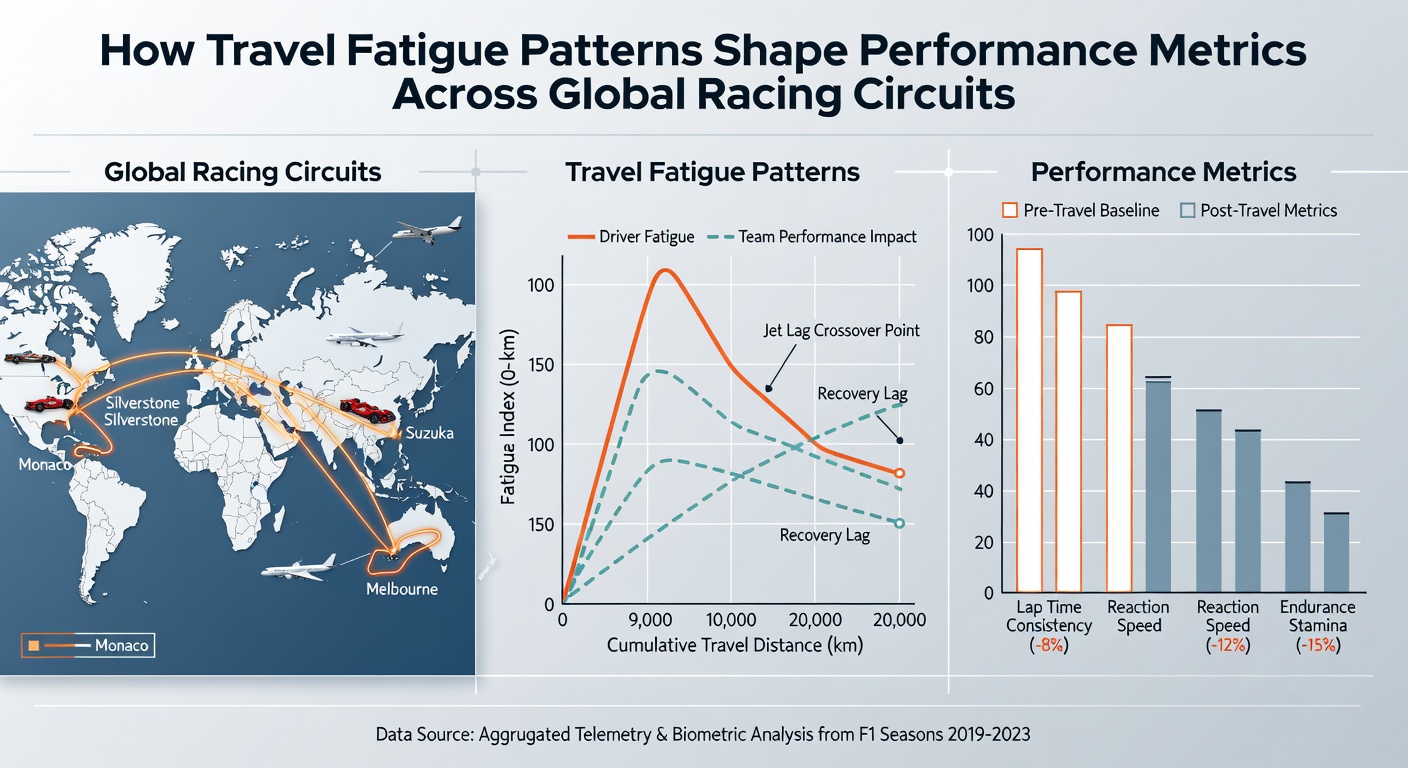
In June 2026 several series introduced standardized fatigue-monitoring protocols that integrate wearable sleep trackers with onboard vehicle sensors. Preliminary outputs from these systems indicate that cumulative flight time over a four-week period correlates more strongly with performance variance than any single journey. Observers note that drivers logging more than 30 hours of air travel within that window show wider spreads in lap-time standard deviation, particularly in the final sector where concentration demands peak.
These new datasets also allow comparison across different aircraft cabin classes and departure times, revealing that red-eye flights followed by immediate simulator sessions produce the largest initial performance gaps. Teams now adjust simulator scheduling and light-exposure protocols based on incoming flight details rather than treating all arrivals uniformly.
Team Mitigation Approaches and Measurable Outcomes
Engineering groups have implemented structured light schedules, targeted meal timing, and limited media obligations during the first 24 hours after arrival. Performance records from the 2025 Australian Grand Prix and subsequent events in Bahrain showed that squads using individualized recovery plans reduced the gap between practice and race pace by an average of 0.15 seconds per lap compared with teams following generic schedules. These adjustments appear in aggregated sector data released by series organizers rather than individual driver disclosures.
Regulatory bodies such as the FIA have incorporated travel-recovery considerations into medical guidelines distributed to all competing teams. The guidelines reference findings from multiple longitudinal studies that link consistent sleep-wake alignment with lower incident rates during high-speed sections. Implementation remains voluntary yet several squads have adopted the recommendations as standard operating procedure.
Conclusion
Performance metrics gathered across global circuits continue to reflect the physiological demands imposed by rapid travel between events. Expanded monitoring introduced in 2026 supplies finer-grained information that connects flight duration, direction, and timing with observable changes in lap consistency and error frequency. Teams and organizers now treat these variables as measurable inputs rather than external factors, allowing data-driven scheduling decisions that account for recovery windows between distant venues.